The plant at a glance
16 Psyche holds native iron-nickel: metal that is already metal, mixed with rock. One complete plant turns it into cargo: 10 process areas, from ore to a locked slot in a cargo ship. Far from help, it must work the first time.
The mission is a scenario: the company, the flights and the asteroid plant are fiction. The engineering is real: the process chain, the safety concept and 186 tested models of real catalogue devices. The plant is being virtually commissioned area by area.
- One chain from raw ore to a locked cargo slot.
- Only current catalogue products. Every spare part can be ordered.
- Every device model tested in software, before any hardware.
- Safety in every area and vehicle, never over the radio.
From raw asteroid ore to launch-ready cargo
Ten process areas follow the product. The main line ends with racks locked in the cargo bay. Two by-product lines pack the refinery residue and turn tailings and slag into building material.
Ten areas, one chain
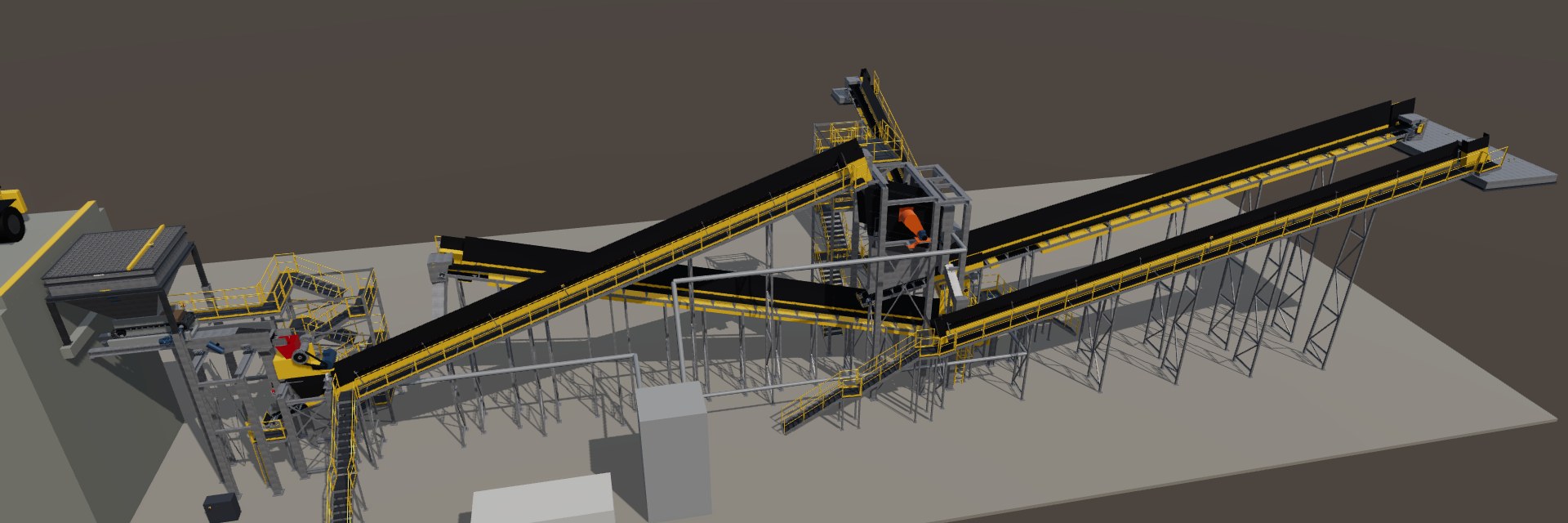 Area 11Primary crushing and screeningTwo crushers, a screen and a magnetic drum free the metal from 10 t/h of raw ore.View area10.00 t/h
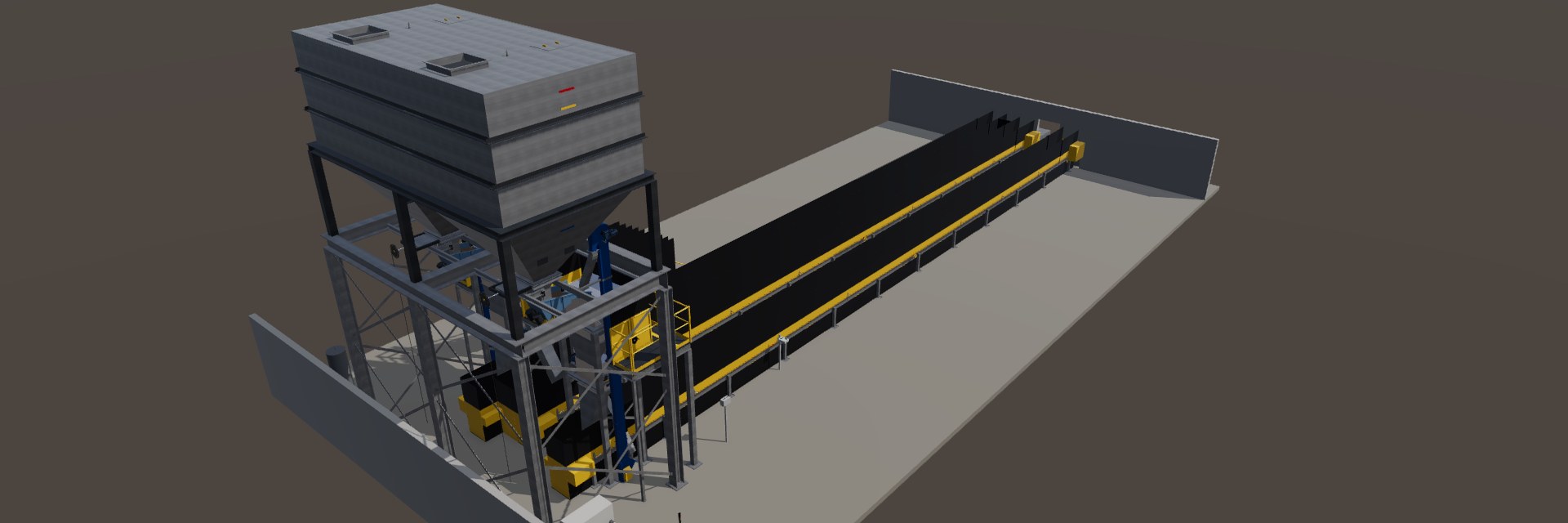 Area 12Dry magnetic separationTwo lines of dry magnetic drums pull the metal out of 8.40 t/h of crushed rock.View area8.40 t/h
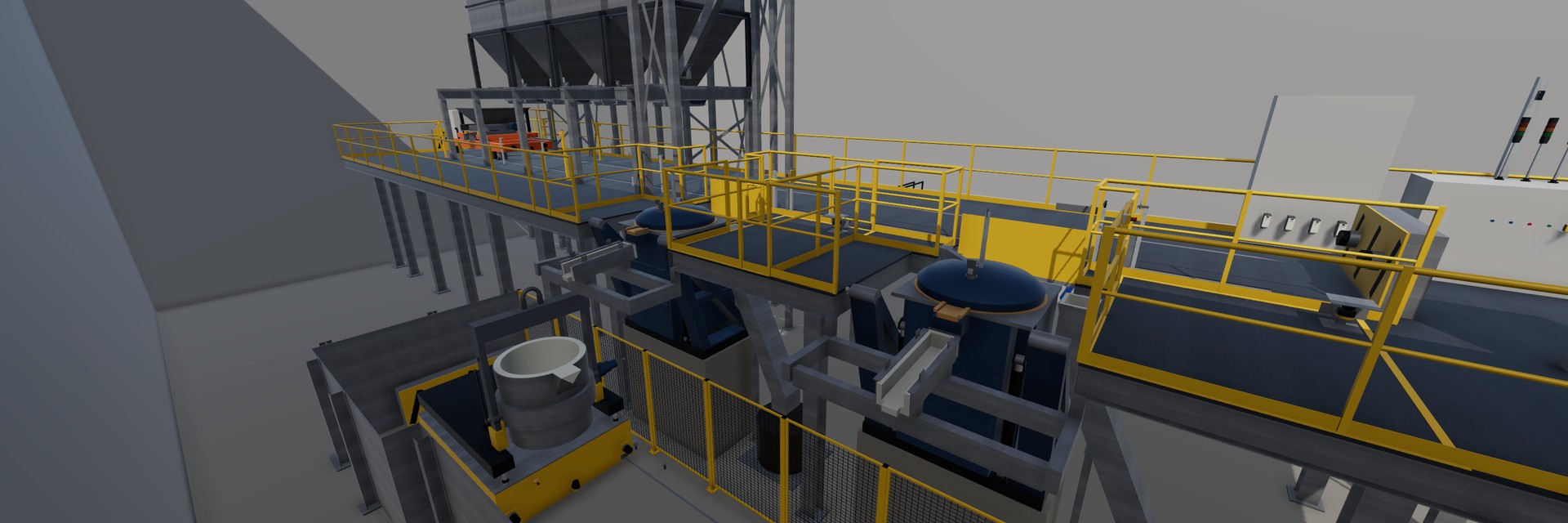 Area 13Induction meltingTwo 3 t induction furnaces melt the dry metal feeds into one checked iron-nickel alloy.View area6.23 t/h
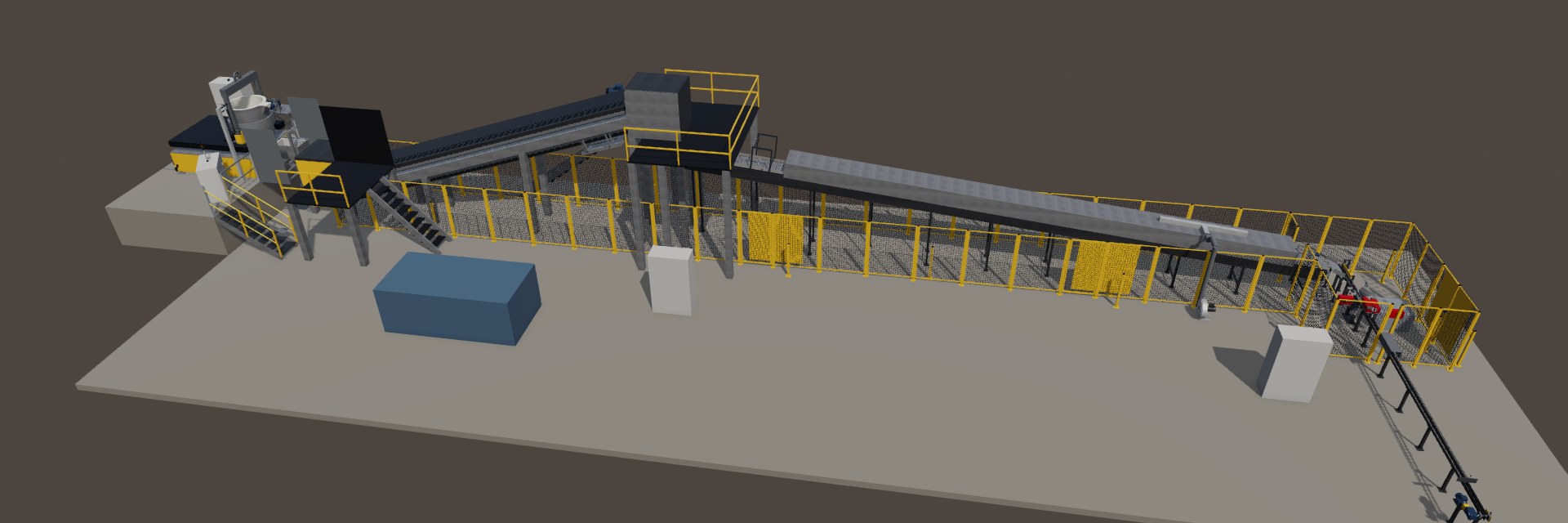 Area 14Chain ingot castingA chain casting machine turns liquid metal into 20.7 kg ingots, each weighed and marked.View area6.11 t/h
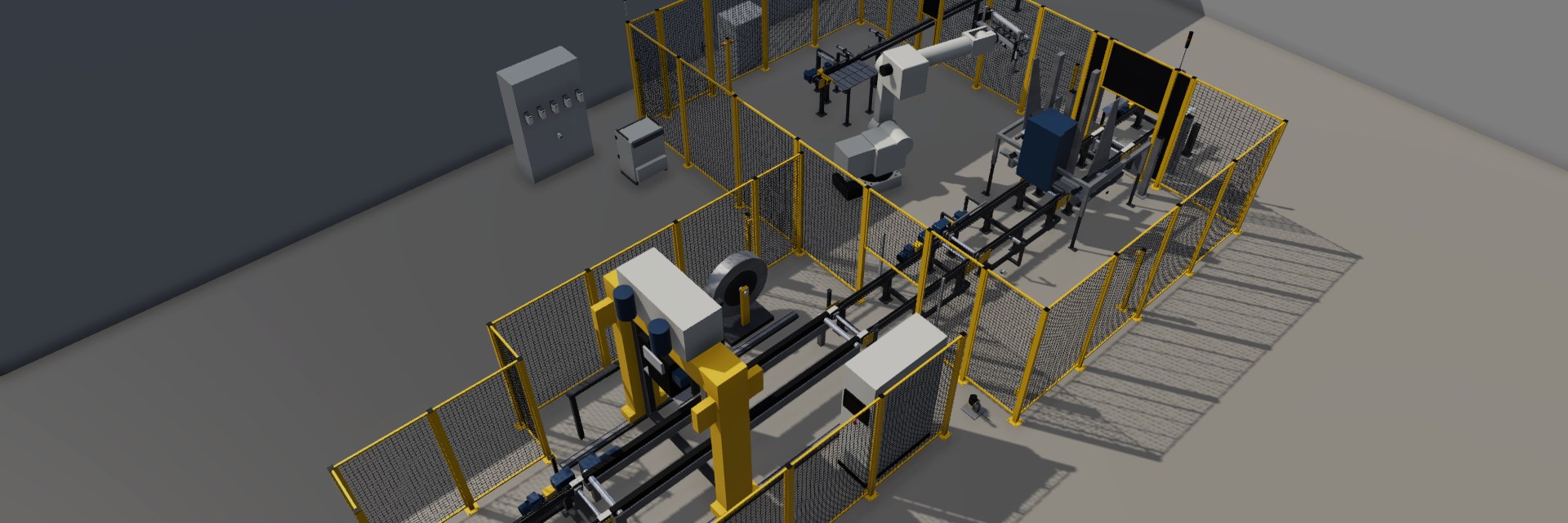 Area 15Ingot bundling and strappingA robot stacks 90 ingots on a steel skid, and a machine straps them into one bundle.View area3.28 bundles/h
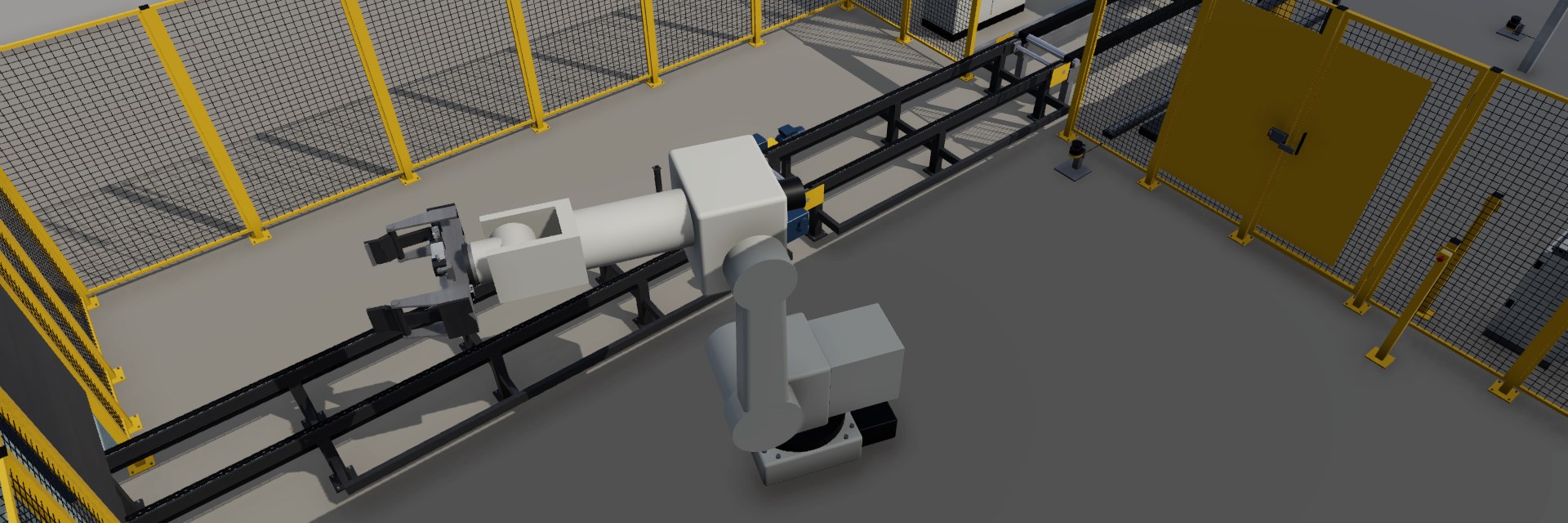 Area 16Residue drum filling and palletisingThe cobalt and platinum-group residue is filled into 200 kg steel drums, sealed, tagged and palletised.View area200.0 ± 0.5 kg
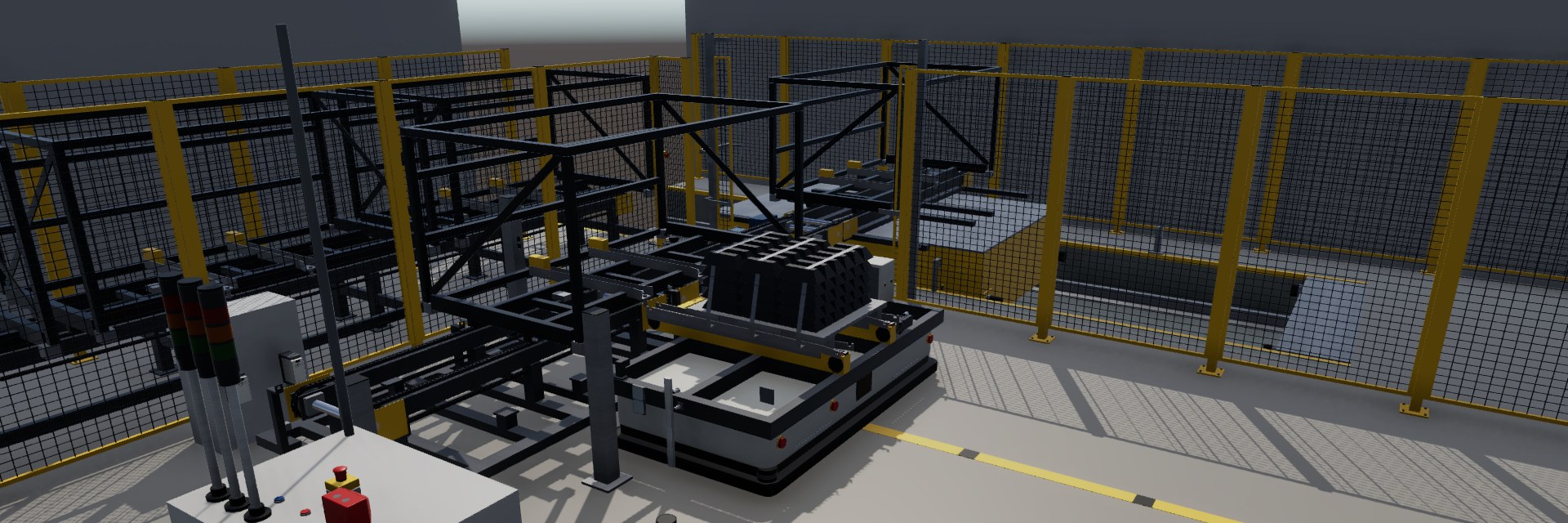 Area 17Cargo rack loading and weighingA driverless vehicle loads ingot bundles and drum pallets into cargo racks, which are weighed, locked and tagged.View area3.38 racks/h
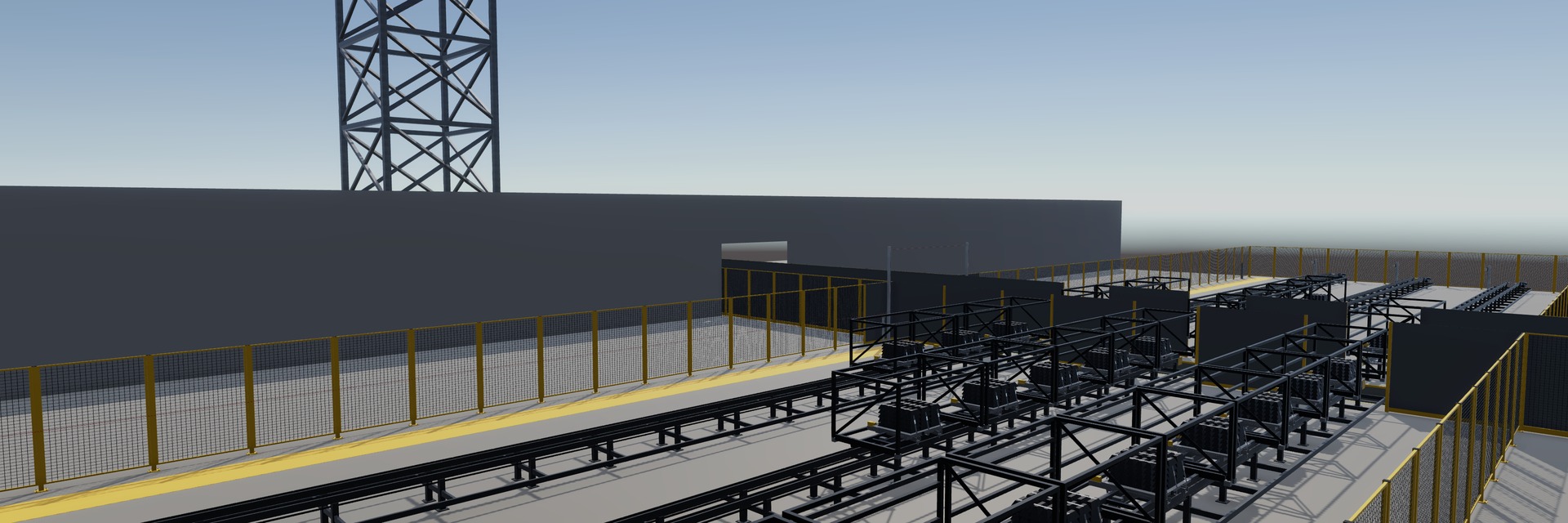 Area 18Launch yard and cargo set stagingA battery rail cart sorts racks into cargo sets of 26 and feeds them to the pad tower.View area26 racks
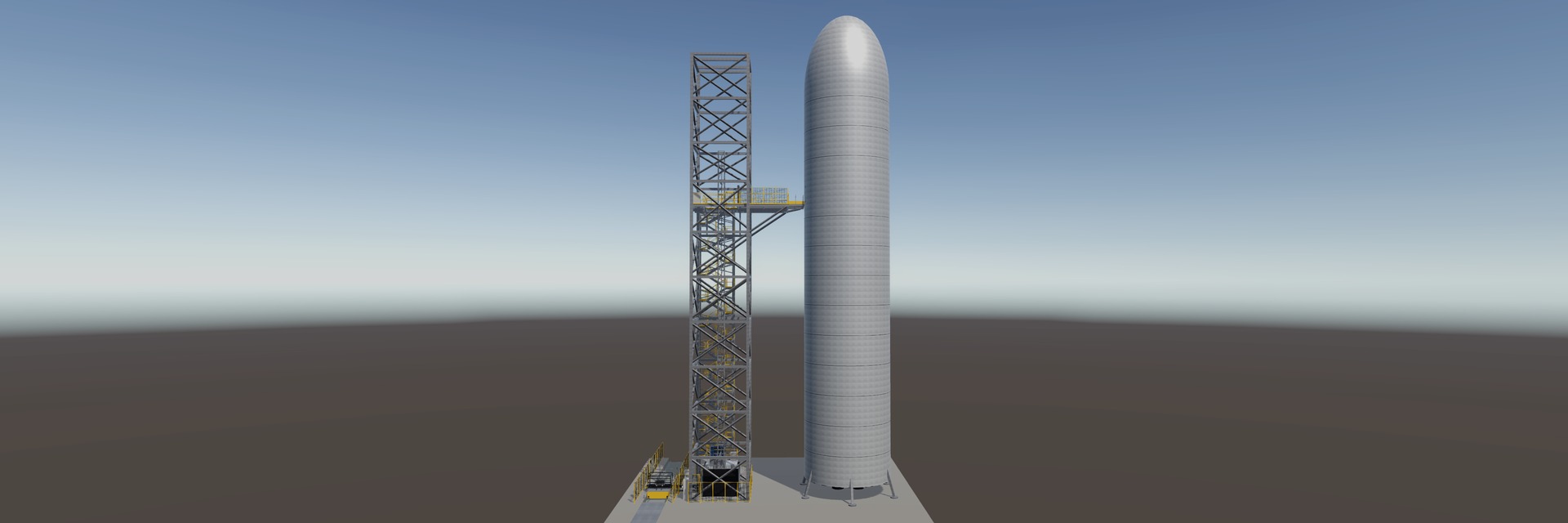 Area 19Pad loading towerAn elevator lifts each rack to the ship's door, where it is checked, pushed in and locked.View area26 racks
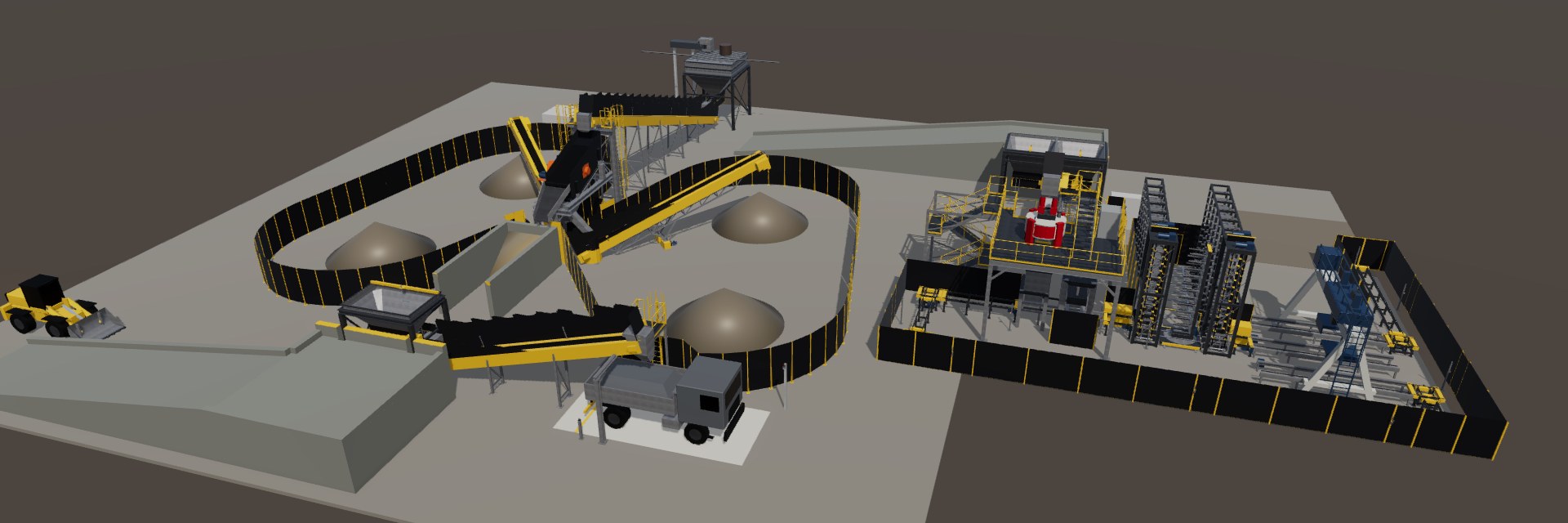 Area 20Aggregate and building blocksLeft-over rock, dust and furnace slag become aggregate (sorted stone material) and concrete blocks for the site.View area3.83 t/h
Films, animations and 3D views from the twin
The founder and chief engineer
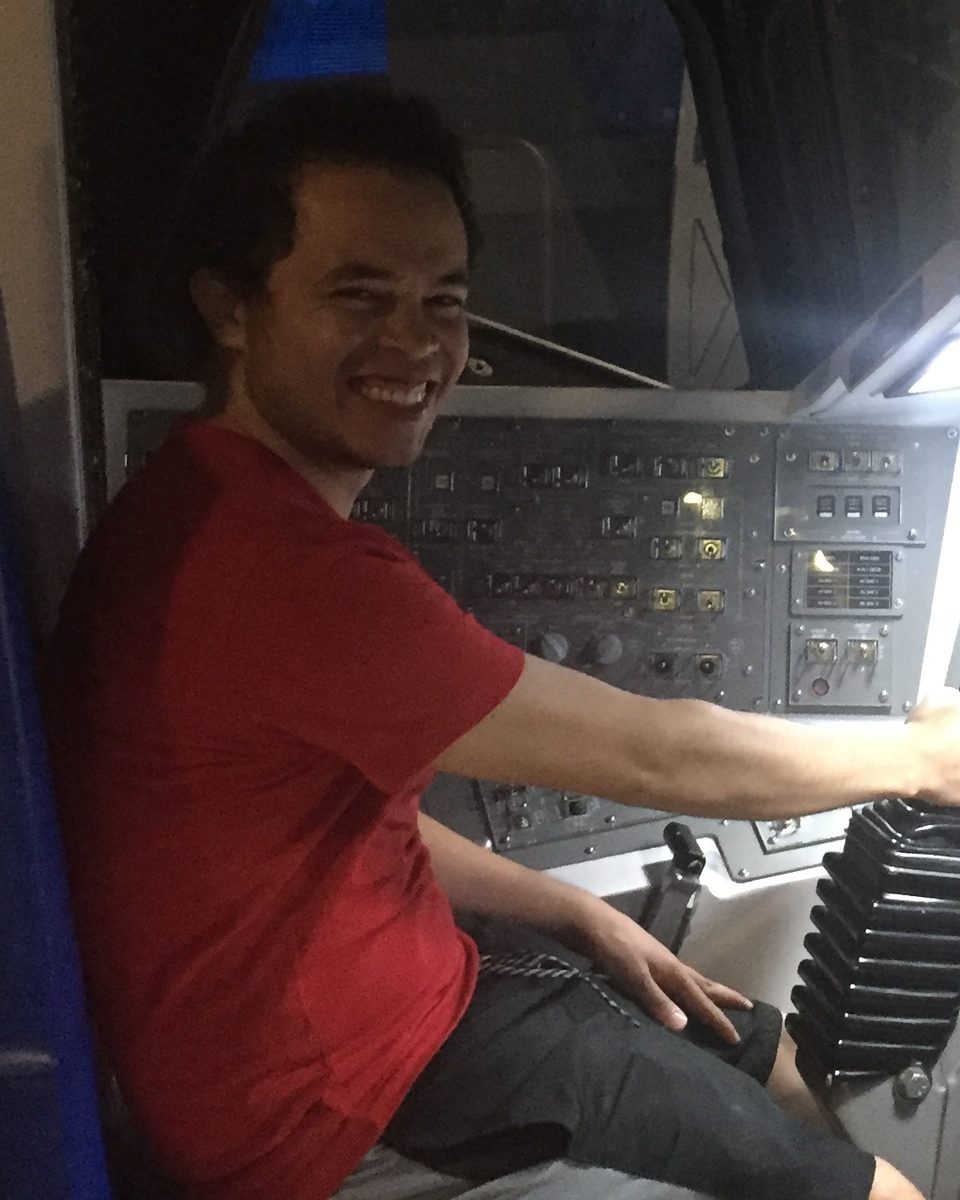
Luis Pedraos
Luis Pedraos founded the company and is its chief engineer. He led the plant from its design to its installation on the asteroid. He built the mission on real catalogue devices and a full digital twin, tested before anything flew.
Far from help, a plant must work the first time, so we test it on the Earth first.
This whole project is a personal portfolio piece: the scenario is fiction, but the engineering is the real work of Luis Pedraos. It shows his capabilities: how he engineers and builds digital twins of industrial plants, with a real industrial scope. It is not an offer of services.
A concept scenario with real engineering
The company, the mission and the plant on 16 Psyche are a story. The plant design, the PLC programs, the device models and the tests are real engineering work. Every device is a real industrial product, modelled from its maker's published data, and the PLC moves every machine in the films.
Built to show one thing: how a complete industrial plant, with its devices, safety, interconnections and PLC programs, is engineered and proven as a digital twin before any hardware exists.
What is fiction, what is realInterested in how this plant was engineered?
I am happy to talk about the digital twin, the PLC code and the commissioning approach. Employers and recruiters are welcome to get in touch.