Every mine on the Earth started with a discovery. Ours started with a faint point of light, found in 1852. The story that follows is a scenario. The plant in it is real engineering, and you can explore it here.
On 17 March 1852, an astronomer in Naples found the sixteenth minor planet. It was named Psyche. Much later, radar showed ground rich in iron and nickel: a rare metal-rich world.

Luis Pedraos asked a practical question: what would it take to turn that metal into cargo? Native metal needs no chemistry, only crushing, magnets, furnaces and good automation. He founded our company to answer it.
Before any hardware flew, we designed and programmed the whole plant as a full digital twin: a full working copy in software. Every device was modelled from its datasheet and tested, 113 of them live against the PLC. We tested faults too, like a blocked chute or a lost radio link.
Luis Pedraos showed investors the plant at work in the twin, and they backed the mission. Industrial companies joined as partners. The partners and investors of this story are fictional. No real device maker is a partner of this work. Our rule: only current catalogue products, so every spare part can be ordered.
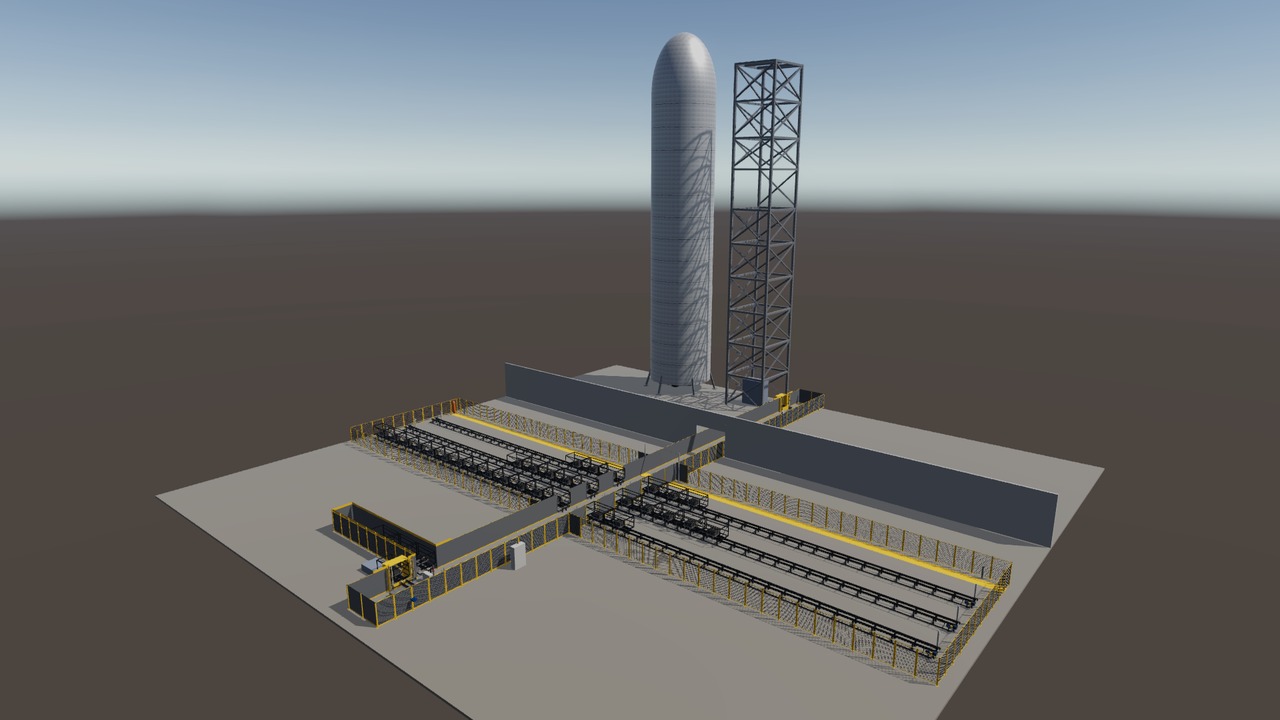
To reach the asteroid, we needed ships for heavy industrial cargo. A launch and spacecraft company became our partner. Together we matched the cargo racks and the loading tower to its cargo bay.
The machinery travelled in planned loads, packed area by area: crushers, magnet drums, furnaces, robots and vehicles. As the digital twin planned, each crate had its place and its turn on site.
We installed the plant area by area. Its code was already tested on the twin, so the start-up needed only fine tuning. Then came the first tap: 3 t of iron-nickel at about 1,580 °C.
The first cargo set: 26 weighed and tagged racks, 49.0 t of net cargo. A tower loaded them into the ship in about 1.7 hours. The ship then flew about 16 months to the Earth.
About every 15 months, a transfer window opens. About 12 ships then take 12 cargo sets home: about 590 t. In between, the plant makes metal for the base and for building in space.
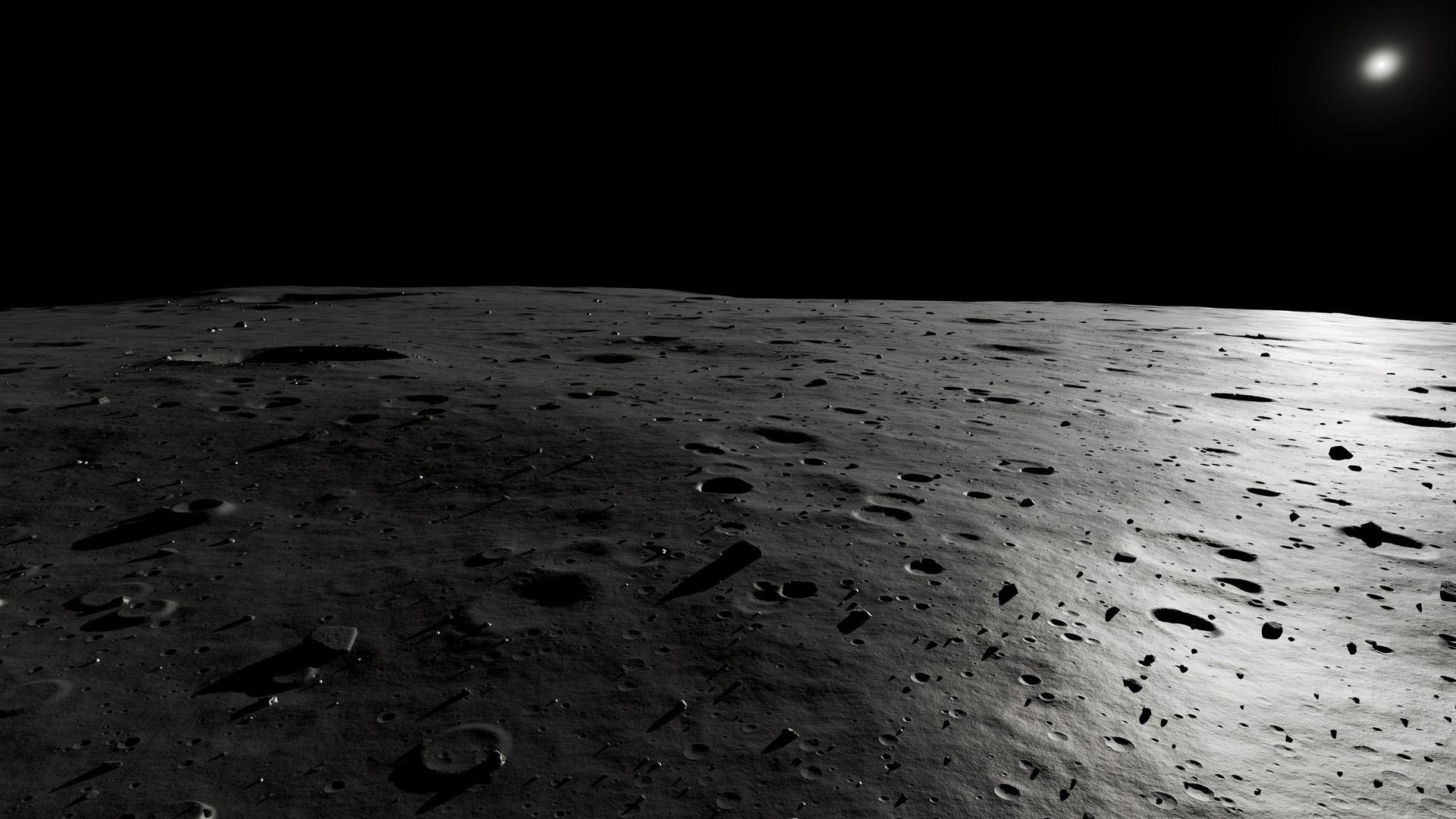
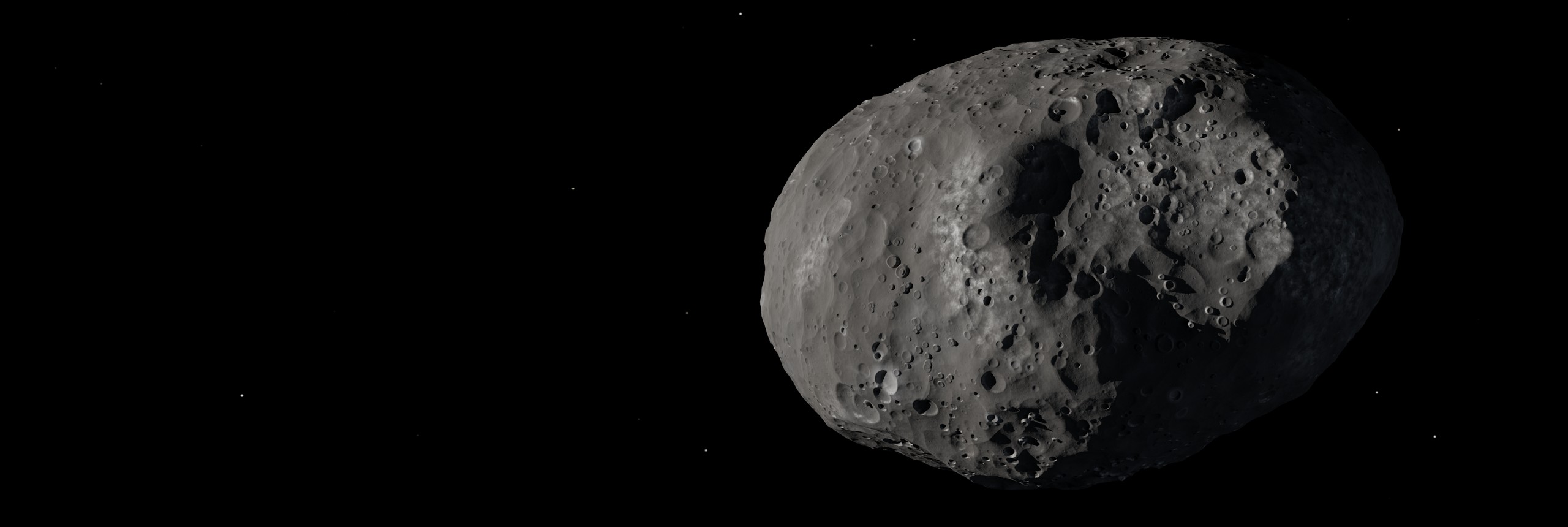
16 Psyche is one of the largest bodies in the main asteroid belt, between Mars and Jupiter. It is about 280 km at its longest. Its light, radar echoes and density point to a mix of metal and rock. These facts come from published science.
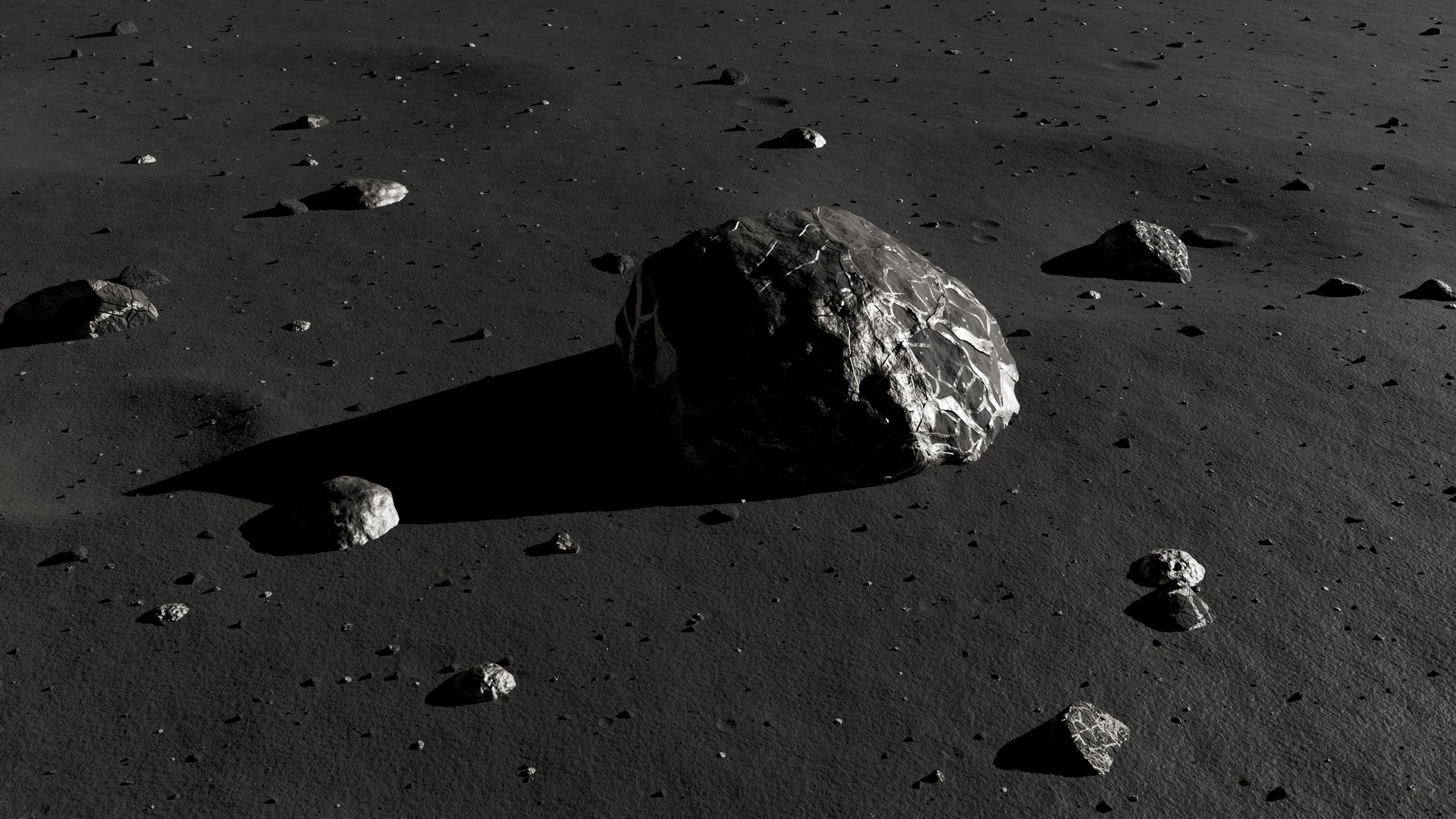
If its metal is like that of iron meteorites, it is native iron-nickel with some cobalt and traces of platinum-group metals. In this scenario, that is why the plant stands here, in about 1 % of Earth's gravity, with no air and deep cold.
These astronomy facts are real and come from published science.
| Discovery | 17 March 1852, by Annibale de Gasparis in Naples, Italy |
| Type | M-type asteroid: its light and radar echoes point to metal |
| Size | About 280 x 240 x 170 km |
| Metal content | Estimated at about 30 to 60 % metal by volume |
| Place | Main asteroid belt, 2.53 to 3.32 AU from the Sun. 1 AU is the mean distance from the Earth to the Sun. |
| Rotation period | About 4.2 hours |
| Surface gravity | About 0.12 to 0.14 m/s², roughly 1 % of Earth's |
| Distance from Earth | Roughly 230 to 650 million km. A radio signal needs roughly 13 to 36 minutes one way. |
A science mission is on its way and is planned to arrive in August 2029.


Luis Pedraos founded the company and is its chief engineer. He led the plant from its design to its installation on the asteroid. He built the mission on real catalogue devices and a full digital twin, tested before anything flew.
Far from help, a plant must work the first time, so we test it on the Earth first.
This whole project is a personal portfolio piece: the scenario is fiction, but the engineering is the real work of Luis Pedraos. It shows his capabilities: how he engineers and builds digital twins of industrial plants, with a real industrial scope. It is not an offer of services.
He designed the 10 process areas, selected 186 real catalogue devices and modelled them from their published data. He planned the safety and the interconnections, wrote the PLC programs with 1,937 unit tests, and is now virtually commissioning the plant in the twin, area by area.
The mission rests on partners on the Earth. Each one brings a part that we cannot build alone. The partners and investors of this story are fictional. No real device maker is a partner of this work.
One company builds and flies the heavy cargo ships, out with our machinery and home with our cargo.
They funded the mission after seeing the complete plant at work in the digital twin.
They make the process machines, robots, drives, sensors, safety devices and control hardware.
We bring metal to the Earth to make it a better place. Every tonne from space is a tonne not dug from the Earth. Over time, that means less mining pressure on land, water and people. On the asteroid, the rock builds the base.
This project exists to show, in one complete case, how I engineer and build digital twins of industrial plants. The scenario is fiction. The engineering is the work of a real project:
The goal is a plant that a commissioning team could take to site with fine tuning, not a redesign.
| About | 'First metal plant on 16 Psyche' is a fictional engineering concept by Luis Pedraos. No such plant exists. All pictures and videos of the plant are renders of a digital-twin simulation and of 3D models. |
| How it was made | Concept, simulation, PLC programs, 3D models, code, scripts and documents: Luis Pedraos. |
| Software | The PLC programs run in an industrial PLC development environment, and the plant moves in a real-time 3D engine driven by that PLC. The 3D models were designed in Blender (blender.org). |
| Device models | Simplified models built from public datasheet dimensions. Product names only identify the real devices; trademarks belong to their owners. |
| Image | Title | Kind | Creator and credit | Source | Licence | Changes | Downloaded |
|---|---|---|---|---|---|---|---|
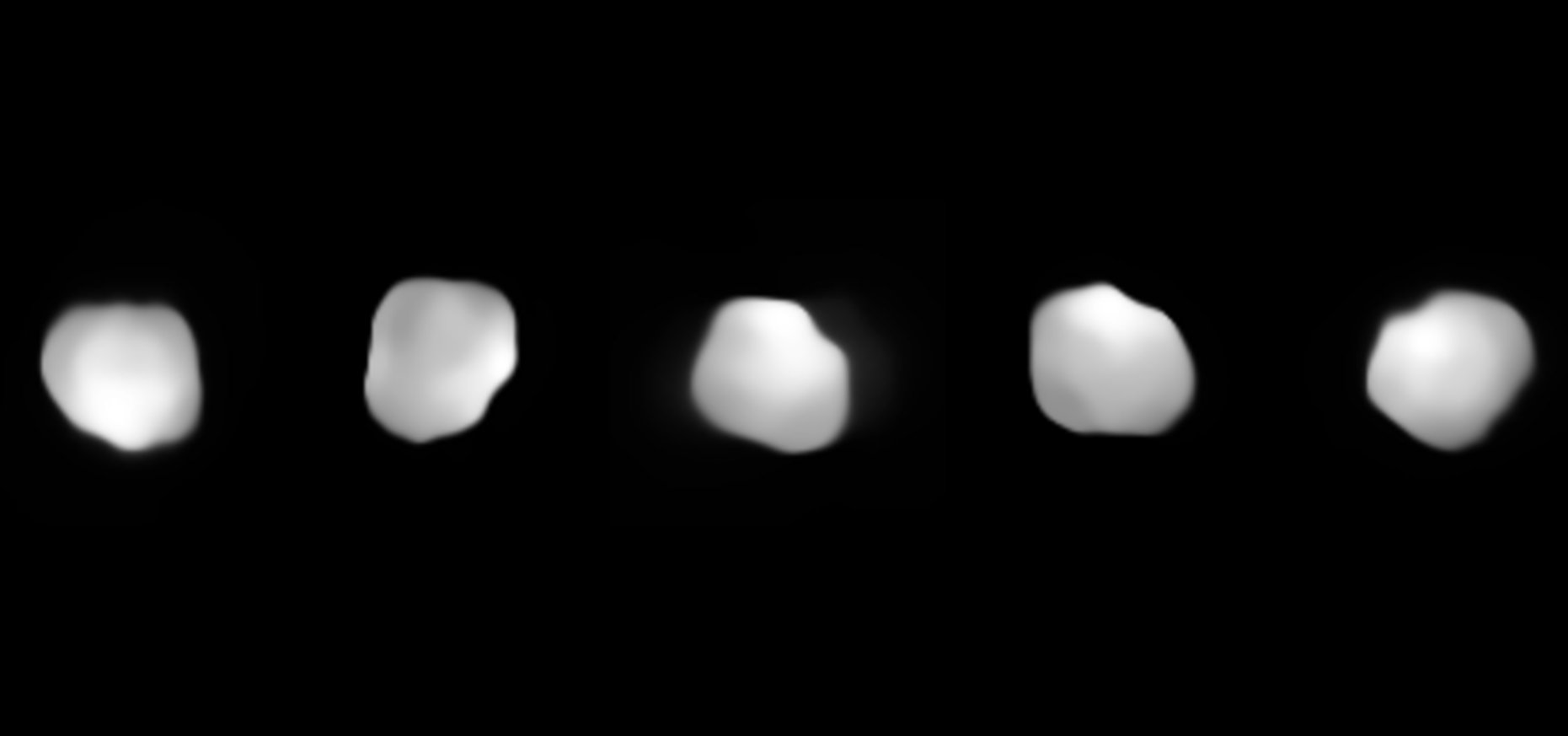
![]() | Psyche (Images of Psyche from the HARISSA survey) | Real telescope image | ESO/LAM Credit: ESO/LAM. Licence: CC BY 4.0. | eso.org | CC BY 4.0 | Saved as JPEG at the original size. No crop, no colour change, no other change. | 2026-10-01 |
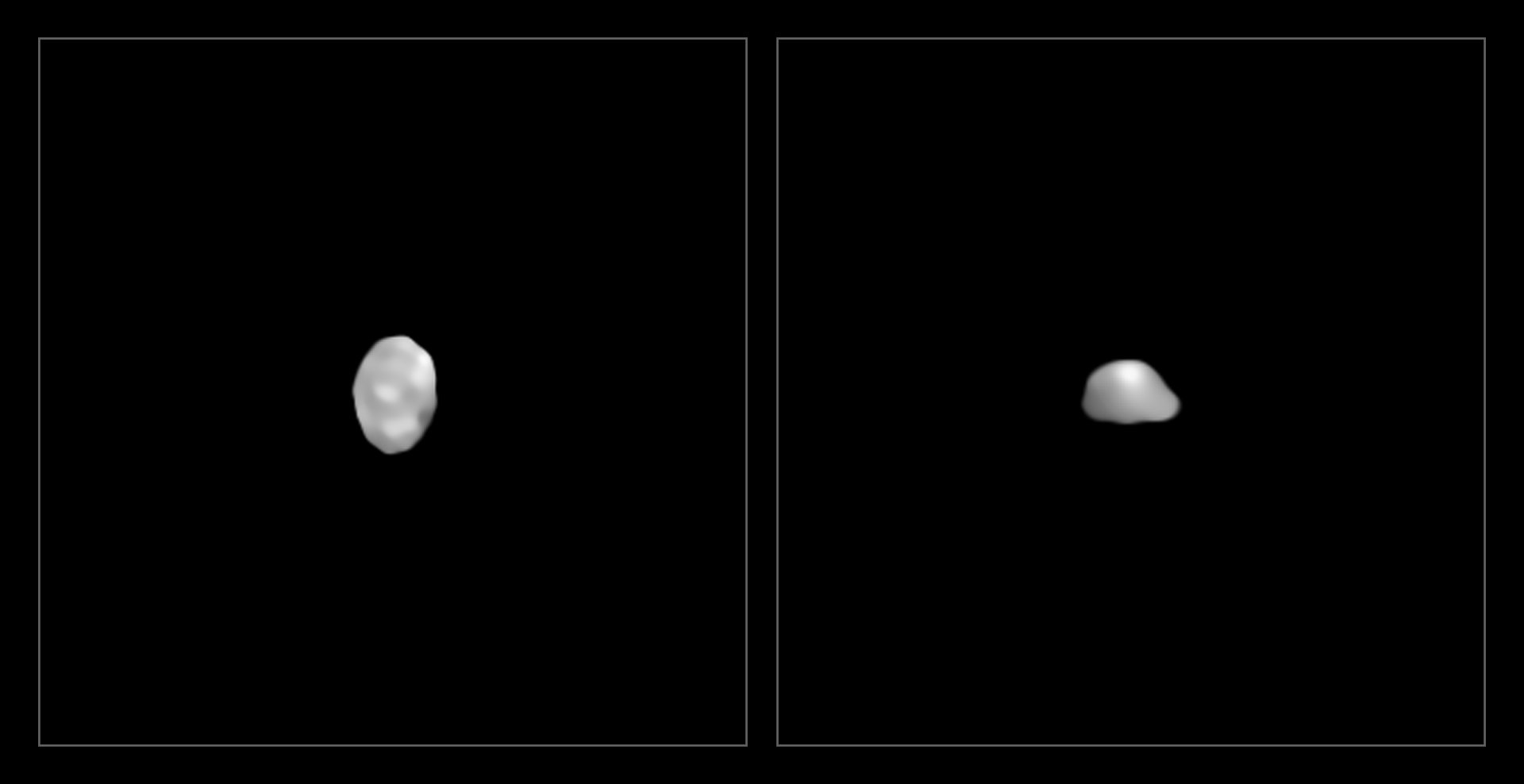
![]() | Kalliope and Psyche (eso2114e) | Real telescope image | ESO/Vernazza et al./MISTRAL algorithm (ONERA/CNRS) Credit: ESO/Vernazza et al./MISTRAL algorithm (ONERA/CNRS). Licence: CC BY 4.0. | eso.org | CC BY 4.0 | Resized from 2118 x 1090 px to 1920 x 988 px and saved as JPEG. No crop, no colour change, no other change. | 2026-10-01 |
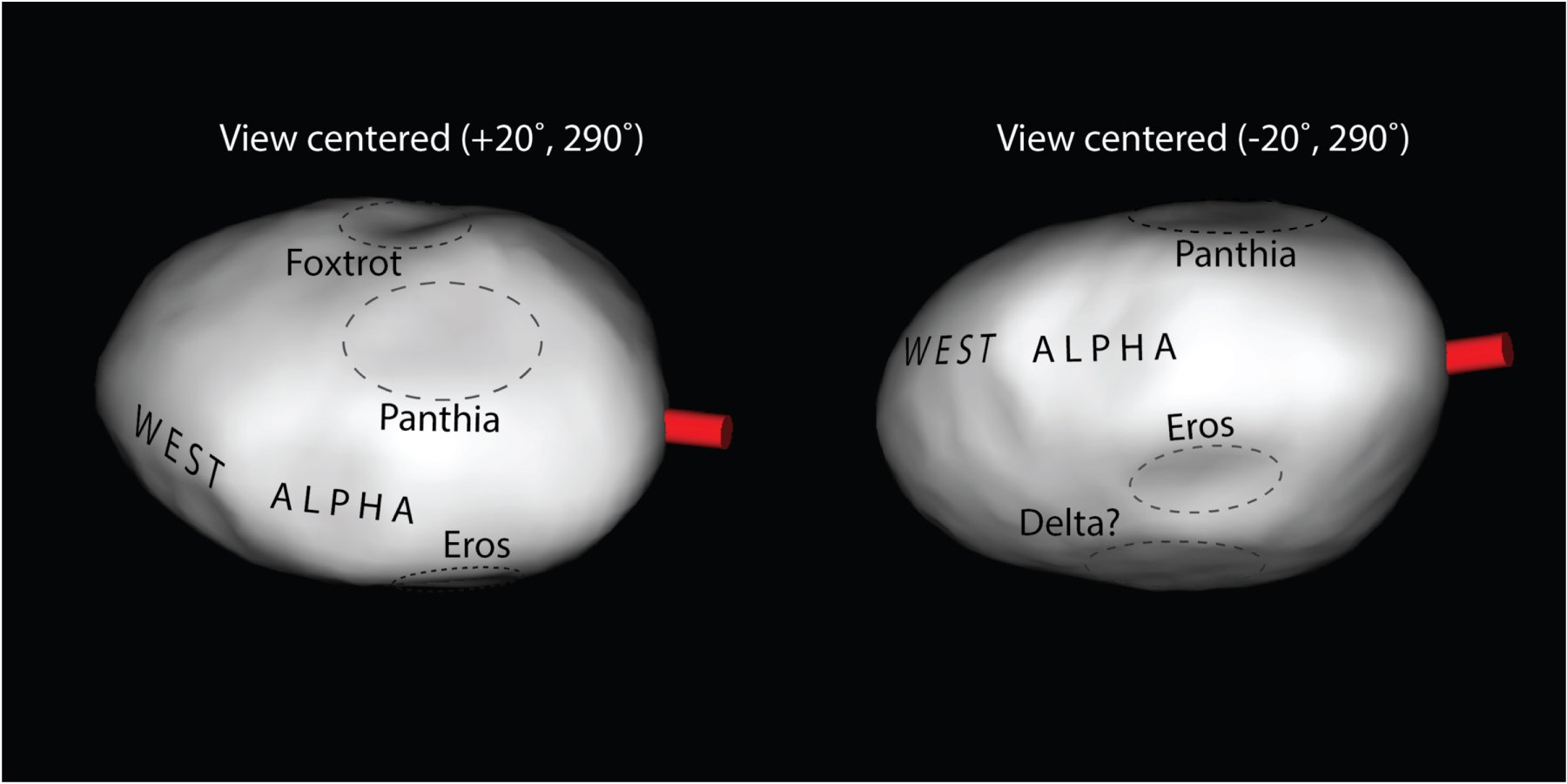
![]() | Asteroid 16 Psyche: Shape, Features, and Global Map, Figure 9 | Shape model made from real data | M. K. Shepard, K. de Kleer, S. Cambioni, P. A. Taylor, A. K. Virkki, et al., "Asteroid 16 Psyche: Shape, Features, and Global Map", The Planetary Science Journal 2, 125 (2021), doi:10.3847/PSJ/abfdba Credit: Figure: M. K. Shepard et al., "Asteroid 16 Psyche: Shape, Features, and Global Map", The Planetary Science Journal 2, 125 (2021), doi:10.3847/PSJ/abfdba, Figure 9. Licence: CC BY 4.0. | iopscience.iop.org | CC BY 4.0 | Saved as JPEG at the original size. No crop, no colour change, no other change. | 2026-10-01 |
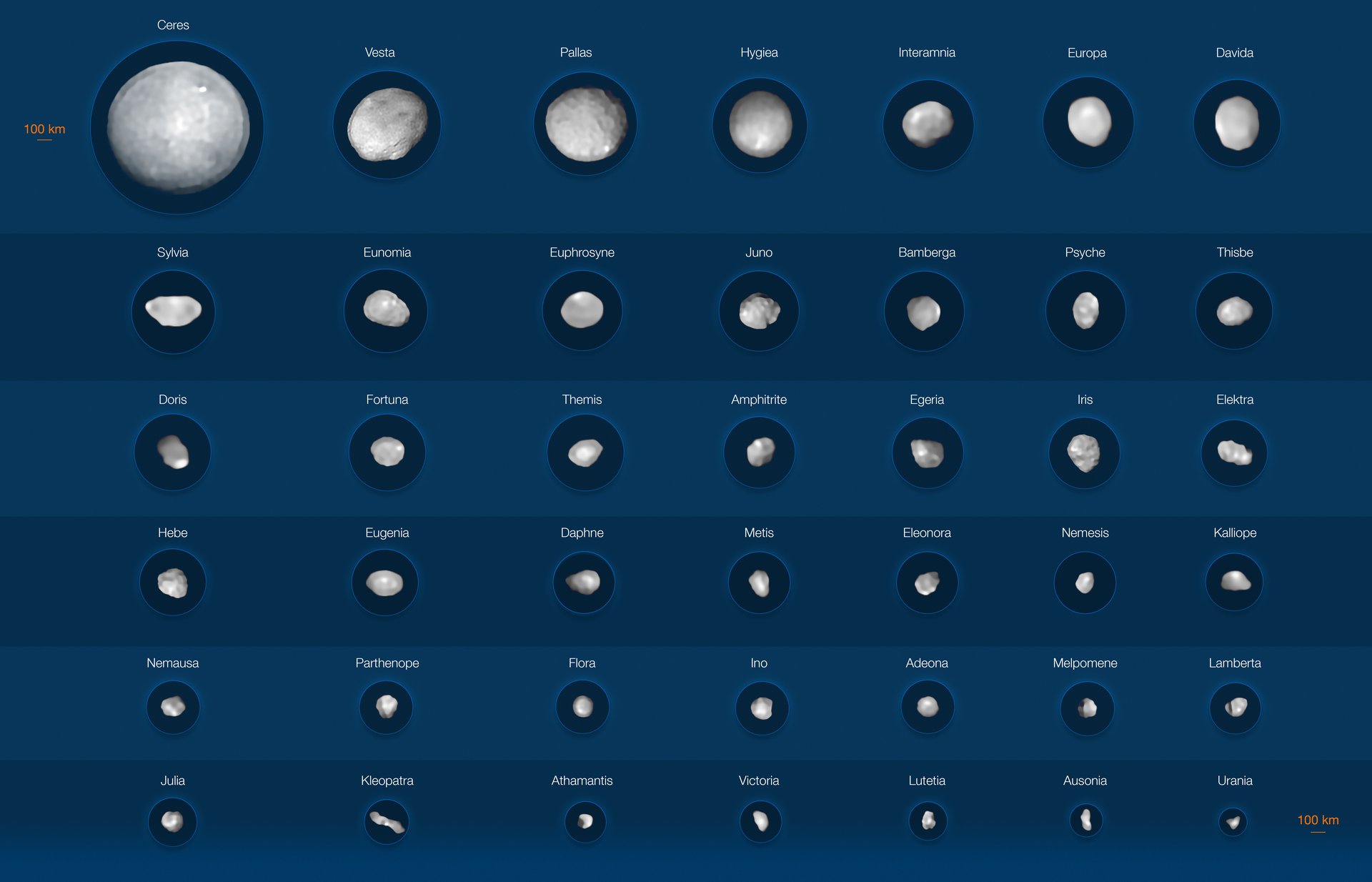
![]() | 42 asteroids imaged by ESO's VLT (annotated) (eso2114a) | Real telescope image | ESO/M. Kornmesser/Vernazza et al./MISTRAL algorithm (ONERA/CNRS) Credit: ESO/M. Kornmesser/Vernazza et al./MISTRAL algorithm (ONERA/CNRS). Licence: CC BY 4.0. | eso.org | CC BY 4.0 | Resized from 6083 x 3910 px to 1920 x 1234 px and saved as JPEG. No crop, no colour change, no other change. | 2026-10-01 |
No affiliation, no endorsement: the organisations and persons named in these credits have no connection with this site or with its concept story.
Their names and marks are used only to credit the sources. No logo of any organisation is used on this site.
Every other image on this site is an own render of the digital twin, a photo owned by Luis Pedraos, or an illustration. Each one is labelled as such.
If you hold rights to one of these images and see a problem, please write through the contact form. The image is removed at once.
The licences and terms of use of these images were last checked on 1 October 2026.
| Image | Title | Label | Credit |
|---|---|---|---|
![]() | 16 Psyche in space | Illustration: own 3D render. Not a photo. | Image: Luis Pedraos |
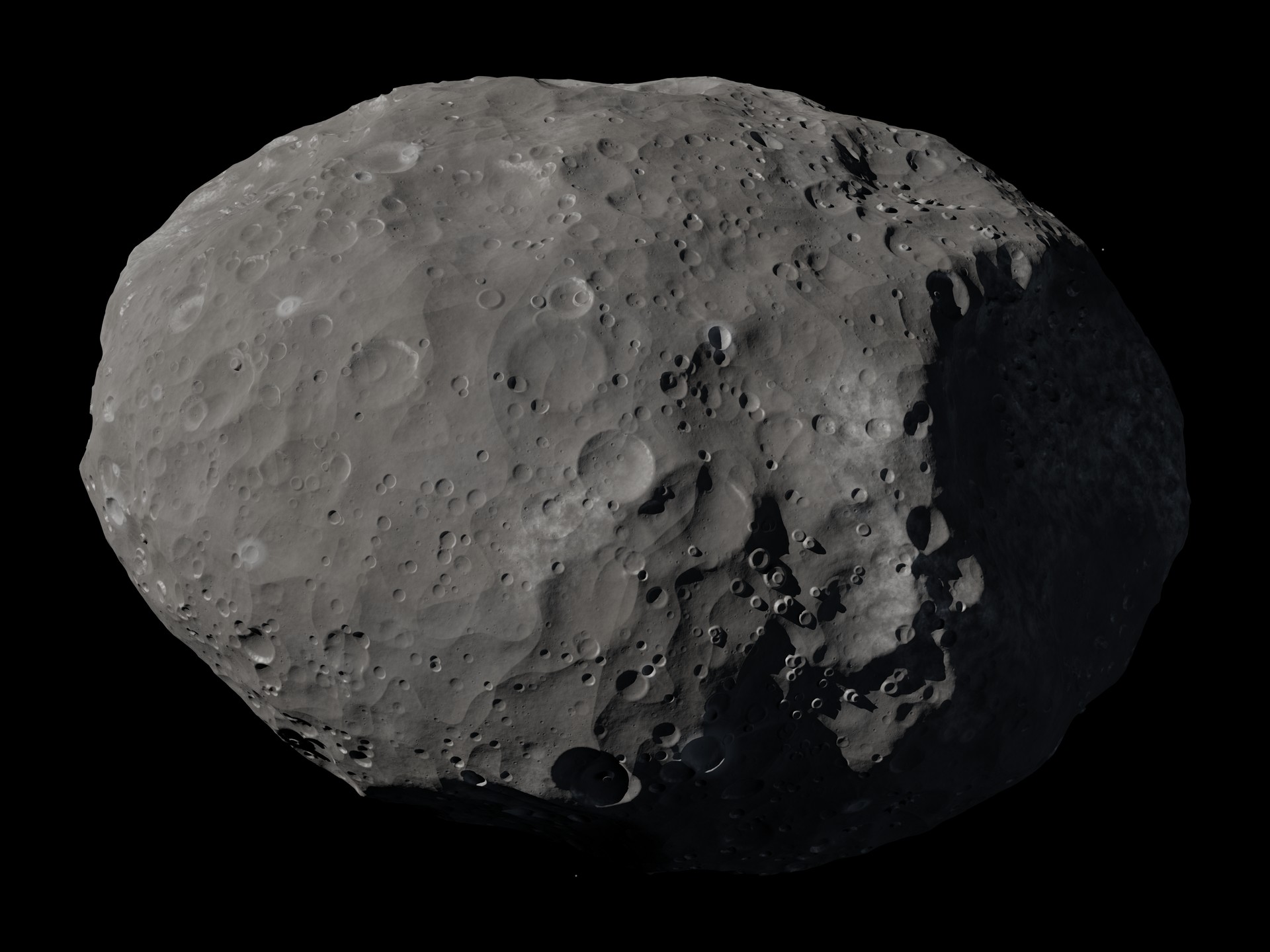
![]() | 16 Psyche, the irregular metal-rich asteroid | Illustration: own 3D render. Not a photo. | Image: Luis Pedraos |
![]() | Low above the surface | Illustration: own 3D render. Not a photo. | Image: Luis Pedraos |
![]() | Metal in the rock | Illustration: own 3D render. Not a photo. | Image: Luis Pedraos |
The story is a scenario. The engineering behind it is real. I am happy to talk about it, and employers and recruiters are welcome to get in touch.